How to measure for a new internal door
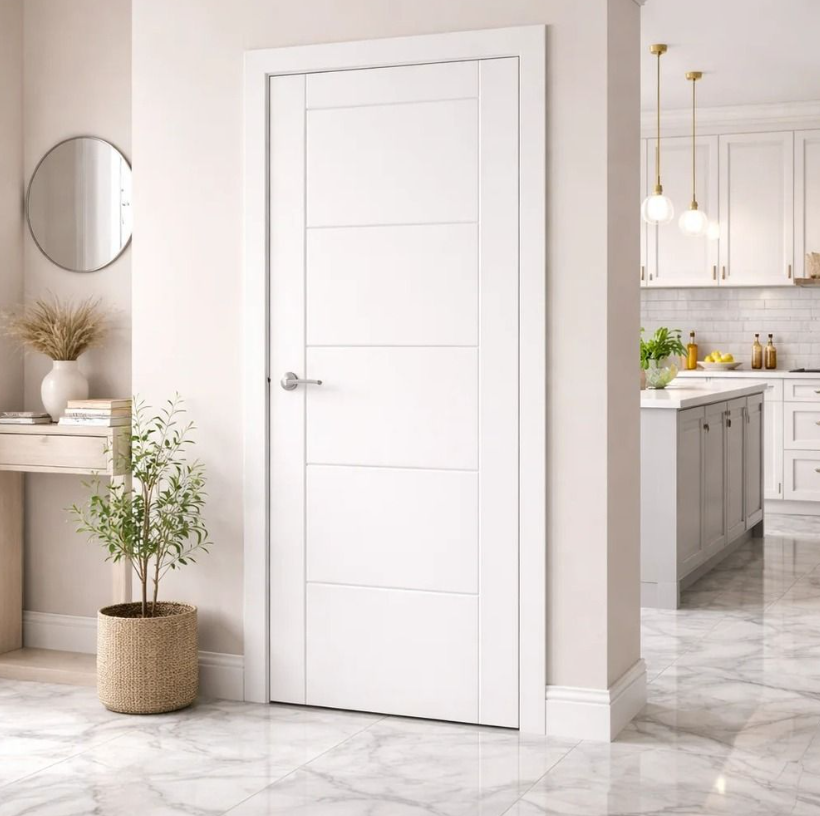
Replacing an internal door can make a big difference to a room, but it's important to get the measurements right. A door that's just a few millimetres too wide, narrow or tall can turn a straightforward job into a frustrating one. Fortunately, measuring for a new internal door is simple once you know where to measure. At Mill Timber Direct, we recommend you check the opening carefully rather than assuming your existing door is a standard size.
What you'll need
You'll only need a reliable tape measure, a pencil and somewhere to record the figures. We recommend working in millimetres because this makes it easier to be accurate and compare your measurements with available door sizes. If your old door is still hanging, that's fine. However, measure the frame rather than relying on the existing door alone. An older door may have been trimmed or altered during a previous installation.
Measure the width in three places
Start by measuring the internal width of the door frame. Take one measurement near the top, another across the middle and a third near the bottom. Don't be surprised if the figures differ slightly. Door frames can move over time, particularly in older properties, and a frame that looks straight may not be perfectly parallel. Write down all three measurements and use the narrowest as your key figure. This helps you ensure that the new door can fit in the tightest part of the frame.
Check the height
Next, measure from the underside of the top of the frame down to the floor. Take the measurement on both the left and right sides and, if you want to be thorough, once in the centre too. Keep all of the figures and work from the smallest. If you're replacing the flooring, remember to allow for the finished floor height rather than measuring only to a bare subfloor. Adding carpet, laminate, tiles or another floor covering will raise the final level; forgetting about the flooring could leave the new door catching once the room's finished.
Measure the door thickness
Width and height get most of the attention, but the thickness is also important. Measure the existing door and check the rebate in the frame where the door closes. A replacement that is much thicker than the original may not sit correctly within the existing frame without further work. It can also affect how the hinges, latch, and other door furniture fit. If you're keeping the frame, choosing a similar door thickness will usually make installation simpler.
Should you measure the old door?
The old door can still be useful, especially if it fits well. Measure its height, width and thickness and compare those figures with your frame measurements. Just don't assume that the old door gives you the exact size to buy. It may have been trimmed before, and the gaps around it may not be even. Using both sets of measurements gives you a clearer picture.
Allow for fitting clearance
An internal door shouldn't fit tightly against every edge of the frame. It needs a small, even clearance so it can open and close without rubbing. Exactly how much a door can be trimmed depends on its construction and the manufacturer's instructions, so always check the product information before cutting.
Is the frame square?
Before ordering, check the condition and shape of the frame. If you suspect it isn't square, measure diagonally from corner to corner. Similar diagonal measurements suggest a squarer opening, while a noticeable difference may indicate distortion. Check for loose sections, splits or damage around the hinge positions too. If the frame needs attention, it makes sense to deal with that before hanging the new door. A wider renovation can also be a good opportunity to replace tired architrave around the doorway for a neater finished appearance.
Check which way the door opens
Measurements tell you whether the door will fit, but you should also note which way it opens. Stand on the side where you pull the door towards you and note whether the hinges are on the left or right. If you plan to change the opening direction, think about nearby furniture, switches and radiators. The hinge positions, latch and door stop may also need altering, so it can become a bigger job than simply hanging a replacement door.
Do one final check
Before ordering, go through your figures again. You should have the smallest frame width, the smallest height, the door thickness and a note of the opening direction. Measure twice rather than relying on one set of figures. A few extra minutes now can save you cutting and adjustment later.
Once you have the measurements, you can choose the door style and finish that suit the room and plan the rest of the job. You may also need hinges, door handles, door locks, door stops or new architraves, so it's worth thinking about the complete doorway rather than the door alone. With accurate measurements in hand, fitting your new internal door should be a much more straightforward project.

Short Code:
Credit Limit:
Current Balance: